Quilting for Charity

Grandmother’s Puzzle Block

There are many unsung heroes quilting for charity, from helping refugees, to helping children in foster care and veterans, to name just a few. Some create a quilt specifically to raffle then donate the funds to charity. Project Linus Quilters Comfort Children in South London, UK In South London, a dedicated group of volunteers connected … Read more

The History of Quilting

Stitching Stories Through Time In the history of quilting, there’s something magical about running your fingers across an old quilt. Each stitch holds a story, each pattern whispers of hands that worked by lamplight, and each fabric scrap carries memories of dresses worn to dances, shirts that clothed growing children, or curtains that once framed … Read more

Easy Quilts For Beginners

When you first start quilting it can be daunting, the amount of information out there. Best thing to do is look for easy quilts for beginners, you’ll find a ton of resources via Google or whatever search engine you use.

I’ve found a few for you, some have tutorials some not, but they’re all good easy quilts projects.

Easy Quilts For Beginners

This  placemat has to be my top pick, so simple yet very effective. Using the “piecing on the go” method it really wouldn’t take long to make a set of these.

Read more

Vetron Auto Seam

vetron auto seam

vetron auto seamWhat is a Vetron Auto Seam I hear you say, and what does it have to do with quilting?!

This article is just a snippet about how technology touches everything we do, including quilting. I’d never heard of Vetron sewing machines until I found a news article about an automated sewing machine that works by using cameras to track the movement of the fabric.

Read more

Free Motion Quilting Instructions

Free motion quilting tips
free motion quilting with the Designio DZ3400
Not so much free motion quilting instructions but, following on from my tips for beginning quilters, I decided to put together my top free motion quilting tips.
Note, it does take practise, not many quilters get it right first time. Expect some odd patterns and snarl-ups till you master it!

Free Motion Quilting Tips

Free Motion Quilting Instructions1)Free motion quilting is a lot about keeping a rhythm.  When you start, it might be helpful to decide what speed (NOT really slow nor flat out) is comfortable for you.

If your machine doesn’t have different speed settings then put some sort of block under the foot pedal so when you mash it down it goes to that speed.

That takes thinking about the speed and your foot out of the equation and helps you to concentrate!

Read more

Embroidery In Quilting

Embroidery in quilting

Lots of crafters who enjoy quilting also end up enjoying embroidery in quilting. You might feel as if you have torn loyalties of which craft to pursue in the small quantity of time available for hobbies. Does this sound like you? Well, you can use both by integrating the two crafts! The depth and color that embroidery stitches provide … Read more

Patchwork Piecing Methods

patchwork piecing methods

This is a short article giving a brief explanation of patchwork piecing methods with some videos for a visual explanation. As you already know, generally quilts are formed using blocks which can be joined together by hand or machine. There are different methods you can use to join (piece) the cut shapes together. English Piecing English paper piecing … Read more

How to Choose the Right Batting

How to Choose the Right Batting

[easyazon_image add_to_cart=”default” align=”right” asin=”B000YQKDE8″ cloaking=”default” height=”160″ localization=”default” locale=”US” nofollow=”default” new_window=”default” src=”https://ecx.images-amazon.com/images/I/51%2BWRpkLiBL._SL160_.jpg” tag=”upcybabyclot-20″ width=”160″]Buy your batting here[/easyazon_image]In a previous article about quilting fabric I briefly mentioned batting, but in this article, I’m going to talk about how to choose the right batting.

It’s important to choose the right kind of batting, many new quilters don’t realize the importance, or know there are many different kinds of batting.

Now, as I said previously,  batting is the “sandwich filling” of a quilt, the bit that goes in the middle between your pieced quit top and the back. It’s also the part that creates the warmth, insulation and weight of your quilt.

Read more

Sewing Ergonomics – How to Sew Without Getting Backache

Sewing ergonomics - how to sew without getting backache

Sewing ergonomics - how to sew without getting backacheMy own recent troubles with backache prompted me to do some research into how to sew without getting backache! If you’ve suffered from this you’ll understand how painful it is, also frustrating when you have quilting projects you want to get on with. This article “Sewing Ergonomics – How to Sew Without Getting Backache” will get you back on track for pain-free sewing!


Read more

How to Patchwork Quilt

how to patchwork quilt

how to patchwork quiltMore and more people want to learn how to patchwork quilt, it’s a “trending” craft according to Google! There’s an overwhelming amount of info out there and there’s no definitive answer, however, first of all you should know some essentials.


HOW TO PATCHWORK QUILT – BEGINNER’S ESSENTIALS

fat quarter bundleFabric – There are different layers to consider when choosing fabric, read this guide for more information on choosing fabrics for quilting.

Cutting – First understand what a rotary cutter is and how it can help. You can also use a fabric cutter which will quickly cut set shapes. Whatever you choose make sure to do some cutting practice first on scrap fabrics.

Quilting terms – become familiar with quilting terms and what they mean. For example, do you know what a quilting ruler is, or what batting is? Check out my glossary, there are simple explanations for each term.

Read more

Quilters Journal Book

quilters journal book

quilters journal book[easyazon_link identifier=”1604689161″ locale=”US” tag=”upcybabyclot-20″]A Quilter’s Journal[/easyazon_link] should be a must for all quilters. A lot of work goes into the quilts we make, from the first design idea to fabric choices and right through to the finishing touches. It makes sense to have a quilters journal book of all this hard work. Whether you keep the quilt for yourself or give it as a present it’s always good to be able to look back at previous projects. I’m sure you’ve sometimes thought “I wish I’d taken a picture,” a quilters journal will make sure you never have this thought again! I’ve done this for my other passion, knitting. I keep a record and refer to it if I’m looking for inspiration for a new project or am stuck on a technical aspect.

If you sell your quilts you can keep a record of who purchased and the price paid. Same with gifts, keep a note of the recipients.

Read more

Quilting Fabric

Simplicity Rotary Cutter Machine

quilting fabricChoosing your quilting fabric is perhaps the most important part of creating a new project, whether it’s a small quilting project or a large one.

There are three elements to making a quilt so it’s important to choose the right quilt fabric for each stage.

  • Top of the quilt, a combination of colors made up of quilt blocks.
  • Quilt batting fabric which goes in the middle.
  • Backing fabric for quilts, a complimentary color to the top.

Read more

What is a Quilt Block

What is a quilt block

Quilting blocksIf you’re a beginning quilter then one of the first terms you’ll hear is “quilt block.” So what is a quilt block? Traditionally, quilts were more often used to make bed covers and were sewn by hand. Because of the difficulty managing  to sew a large quilt, smaller blocks were made. These smaller blocks of fabric could be made in a variety of patterns or a repeating pattern which were then sewn together to form the whole quilt.


By breaking up the quilt pattern into manageable pieces, you can lay easily lay it down and then pick it up again, gradually building the blocks until you have enough to make the quilt.

Read more

What is a Quilting Ruler

quilting ruler

quilting rulerOne of the questions often asked by beginning quilters is “what is a quilting ruler” and why do I need one?” I’ll explain here what a quilting ruler is and how it helps quilters.


What is a quilting ruler?

There’s nothing mysterious about a quilting ruler!  It’s a tool that’s been devised to make cutting simpler for patch working and quilting. A quilting ruler is used to make precise cuts in fabric. Generally made of clear plastic there are measurements painted across the ruler in a grid pattern. These measurements have different angles to help quilters to cut a variety of shapes. They come in different sizes and shapes but most quilters will start with a rectangular quilting ruler measuring 4″ by 12″. It is designed to be used with a rotary cutter and comes in a wide range of shapes and sizes.

Read more

What is a Rotary Cutter

Rotary cutter

Sewing Machines for Quilting

sewing machines for quilting

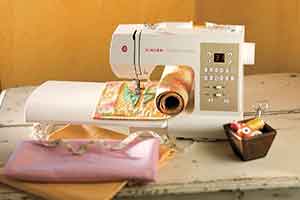
Sewing Machines for QuiltingWhat are the things to take into account when you’re looking for a sewing machine for quilting?

Choosing a machine for quilting is a much different proposition than choosing one for basic occasional use. If you’re on a limited budget it’s more important to have a reliable machine that sews well than have extra bells and whistles on an unreliable one.


Sewing Machine for Quilting – essential things to look for

  • A good straight stitch – essential when piecing fabric together.
  • The option to disengage feed dogs – needed for free motion quilting.
  • Variety of feet – these add extra functionality and a walking foot is a must for moving the 3 layers through evenly.
  • Throat space – this is the space on the right of the needle where your quilt will get shoved through during quilting, the bigger the better!
  • Variable speed motor – helps to give good control when free motion quilting.
  • JUKI Exceed HZL F600 wide sewing spaceExtension table –  to the left of the needle for those larger quilts.
  • Marked measurements on the needle plate – this makes it much easier to achieve accurate 1/4″ seams.
  • Build quality – it’s important to check this. Sewing quilts puts a heavy strain on any machine, a flimsy plasticky machine won’t last long.
  • Lighting – look for sewing machines with more than one light that are angled well onto the work surface. Bright LED lights are the best.
  • Instructions – are they easy to follow and does the machine come with a DVD?

Read more